
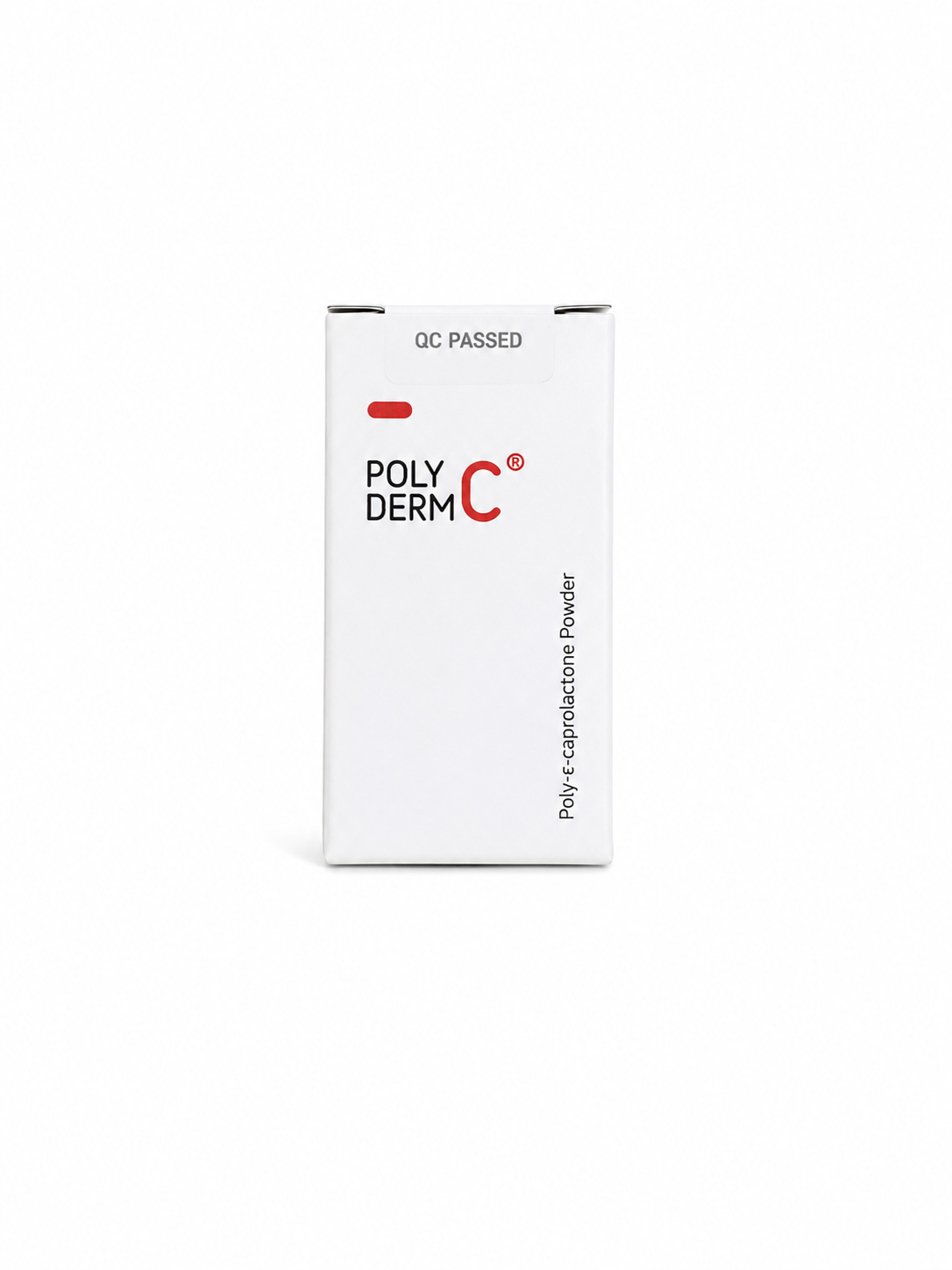
Polyderm PCL Polycaprolactone powder 250MG
In Stock
$99.99
The MOQ for this product is 3 pcs, please add 3 pcs to cart.
Product Name: Polyderm PCL Powder
Main Ingredient: Polycaprolactone (PCL)
Form: Powder
Function: Collagen Stimulator
PCL Content: 250 mg
Application: Professional aesthetic use
Polyderm PCL Polycaprolactone Powder
Polyderm PCL Powder is a professional Polycaprolactone (PCL) collagen stimulator developed for aesthetic protocols focused on facial firmness, structural support, volume, and lifting.
Unlike conventional fillers that primarily create volume through the injected material itself, PCL works as a biostimulatory material, encouraging the formation of new collagen around the treated area. This progressive collagen response helps reinforce the skin’s underlying support structure, making Polyderm PCL particularly suitable for treatments targeting laxity, loss of firmness, wrinkles, and age-related changes in facial contours.
Because of its combination of structural support and collagen stimulation, PCL-based treatments are sometimes described as a “liquid thread lifting” approach to facial rejuvenation.
PCL Collagen Stimulation & 3D Structural Support
Polyderm PCL utilizes Polycaprolactone microspheres to create a gradual biostimulatory response within the treated tissue.
Following administration, the PCL microspheres act as a temporary framework around which newly produced collagen fibers can develop. The interaction between the microspheres and collagen formation helps create a three-dimensional supportive network, contributing to progressive improvement in skin firmness, volume, and structural support.
Rather than producing its full effect immediately, the collagen-stimulating process develops gradually, allowing the appearance of the treated area to improve over time.
250 mg PCL – High Material Content
250 mg of Polyderm PCL Powder contains a PCL weight equivalent to approximately 200 PCL threads measuring 29G × 38 mm, based on material-weight comparison.
This comparison refers specifically to the approximate amount of PCL material and does not mean that injectable PCL powder and PCL lifting threads provide identical clinical effects or treatment outcomes.
How Does Polycaprolactone Work?
Polycaprolactone is a biodegradable and biocompatible synthetic polymer with a history of use in absorbable medical materials, including certain surgical sutures and medical devices.
Within the body, PCL gradually undergoes hydrolytic degradation. Its polymer chains progressively break down into smaller components, which are subsequently processed through the body’s normal metabolic pathways.
The degradation rate of PCL varies considerably according to factors such as its molecular weight, formulation, structure, dimensions, and the specific medical application.
This gradual biodegradation is one of the characteristics that makes PCL useful as a material for longer-term biomedical and aesthetic applications.
More Than Immediate Volume
One of the key characteristics of a PCL collagen stimulator is that its aesthetic effect is not based solely on physical filling.
PCL microspheres provide an initial structural framework while stimulating a gradual collagen response. As collagen develops around the microspheres, the newly formed collagen network can help support the treated tissue and improve its overall appearance.
This makes Polyderm PCL suitable for professional aesthetic protocols focused on:
- Facial lifting and structural support
- Improved appearance of skin firmness
- Collagen stimulation
- Facial volumization
- Improvement in the appearance of wrinkles and folds
- Enhanced skin elasticity
- Improved facial contours
- Smoother-looking skin texture
Expected Aesthetic Effects
Lifting & Firming
Supports the underlying tissue structure to help create a firmer and more lifted-looking appearance.
Collagen Stimulation
Encourages new collagen formation around the PCL microspheres for progressive improvement in skin structure.
Facial Volume
Helps restore the appearance of volume in areas affected by age-related structural changes.
Wrinkle Improvement
Improved structural support and collagen formation may help soften the appearance of facial wrinkles and folds.
Skin Texture
Supports smoother, firmer, and more refined-looking skin as collagen develops over time.
Tissue Support
The three-dimensional collagen network formed around the PCL microspheres may contribute to improved support and compaction of the treated tissue.
Polycaprolactone – A Biodegradable Medical Polymer
PCL has been extensively studied as a biocompatible and bioresorbable polymer for a variety of biomedical applications.
Important characteristics of Polycaprolactone include:
- Biodegradable polymer
- Biocompatible material
- Gradual hydrolytic degradation
- Used in certain absorbable medical devices and surgical materials
- Suitable for creating temporary structural scaffolds
- Capable of supporting collagen formation in appropriate aesthetic formulations
The combination of gradual biodegradation and collagen biostimulation allows PCL-based aesthetic products to provide a different approach from traditional Hyaluronic Acid fillers.
| pdo-threads-type | 250mg, 500mg |
|---|
Reviews
There are no reviews yet.